Alcohol and Sleep: Why a Nightcap Makes Your Sleep Worse
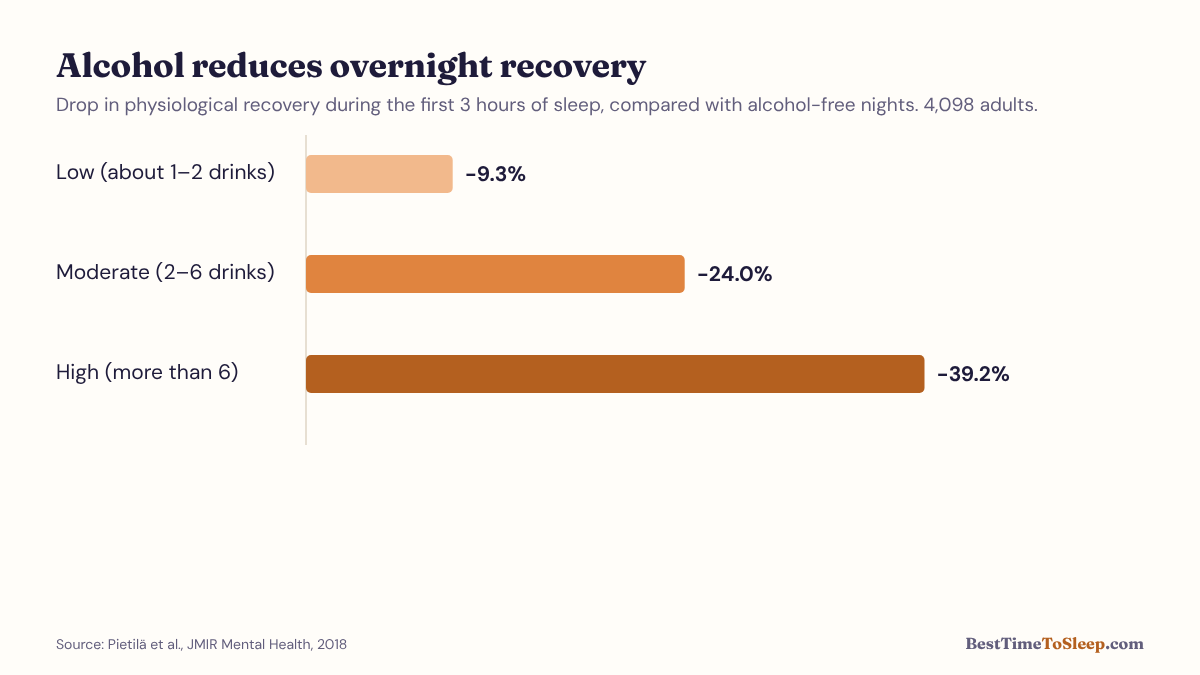
Alcohol may help you fall asleep faster, but it makes the rest of the night worse. In a study of 4,098 Finnish adults, the body’s physiological recovery during the first hours of sleep fell by 9% after 1 to 2 drinks, 24% after a moderate amount and 39% after heavy drinking. Alcohol also suppresses REM sleep and leads to lighter, more broken sleep later in the night.
Key facts
- Alcohol is a sedative: it can shorten the time it takes to fall asleep.
- As your body breaks alcohol down, sleep becomes lighter and you wake more in the second half of the night.
- Alcohol reduces REM sleep, especially early in the night.
- Even 1 to 2 drinks measurably reduced overnight recovery in a study of 4,098 people.
What alcohol does across the night
| Part of the night | Effect of alcohol |
|---|---|
| Falling asleep | Often faster, because alcohol is a sedative |
| First half | More deep sleep but less REM sleep than normal |
| Second half | As alcohol wears off, sleep becomes lighter and more broken, with more awakenings |
| Breathing | Relaxes throat muscles, which can make snoring and sleep apnea worse |
| Bathroom trips | Alcohol makes you produce more urine, so you’re more likely to wake up |
The recovery study
In 2018, Julia Pietilä and colleagues analysed real-world data from 4,098 Finnish adults aged 18 to 65 who wore heart rate monitors for at least two nights, one after drinking alcohol and one without. They measured heart rate variability, a sign of how well the body’s “rest and digest” system is recovering during sleep.
| Alcohol intake (for an average adult) | Reduction in recovery during the first 3 hours of sleep |
|---|---|
| Low (about 1–2 drinks) | 9.3% |
| Moderate (about 2–6 drinks) | 24.0% |
| High (more than 6 drinks) | 39.2% |
Doses were set by body weight, so the drink counts are approximate. The effect was seen in both men and women, and in younger and older adults, including people who were physically active.
Why you wake at 3 AM after drinking
Your liver breaks alcohol down at a fairly steady rate. As the alcohol level falls during the night, its sedating effect wears off and there’s a rebound: sleep becomes lighter, REM sleep returns in a rush, and you’re more likely to wake up, often in the early hours. Read more in why do I wake up at 3 AM?
How to drink and still sleep well
- Stop earlier. The American Academy of Sleep Medicine advises avoiding alcohol before bedtime; many experts suggest stopping at least 3 to 4 hours before bed.
- Drink less. The effect on sleep grows with the amount.
- Drink water alongside alcohol, but not a lot right before bed.
- Don’t use alcohol as a sleep aid. The NHS lists alcohol among common causes of insomnia, and relying on it can lead to worse sleep and more drinking.
- Keep your wake-up time steady the next morning. A short early-afternoon nap is better than a long lie-in.
Sources
- Pietilä J et al. Acute effect of alcohol intake on cardiovascular autonomic regulation during the first hours of sleep in a large real-world sample of Finnish employees. JMIR Mental Health, 2018
- AASM Sleep Education: Healthy sleep habits
- NHS: Insomnia
Frequently asked questions
How long before bed should I stop drinking?
At least 3 to 4 hours is a common recommendation, and less alcohol is better for sleep.
Does one glass of wine affect sleep?
Slightly. In the Finnish study, 1 to 2 drinks reduced overnight recovery by about 9%.
Why do I sleep badly after drinking even though I fall asleep fast?
Alcohol’s sedative effect wears off during the night, which leads to lighter sleep, less REM and more awakenings.